Can some coral reefs survive global warming? Scientists are racing to find them

Coral reefs cover only about 0.1% of the global ocean surface but host around a quarter of all marine species. NOAA data indicate that since 1998 about half of the world's coral reefs have died or been seriously damaged. Ars Technica reports on the scientists working to find heat-tolerant coral colonies and to measure heat tolerance in the lab.
Corals are simple animals that live in a symbiotic relationship with single-celled algae (zooxanthellae). The algae supply 90% of the coral's energy through photosynthesis and give the reef its characteristic colours. When water temperature exceeds a threshold — usually 1°C above the coral's long-term local average — for several weeks, the coral expels the algae. This is "coral bleaching". If the algae do not return, the coral starves.
Global ocean temperatures have set record levels since 2023. Australia's Great Barrier Reef recorded its fourth mass-bleaching event in 2024; in the Caribbean, NOAA called the 2023–2024 bleaching "unprecedented".
What are scientists looking for? One of the teams Ars Technica follows focuses on the sub-tropical corals off Australia's Lord Howe Island. These corals historically experience a broader temperature range, which may have given them a genetic advantage in heat tolerance. A 2024 study by the Australian Institute of Marine Science (AIMS) found the Lord Howe population had 1.2–1.5°C higher tolerance than standard Great Barrier Reef populations.
A second strand looks at deep-water and intertidal Pacific corals. A University of Hawaii project showed that corals near Pearl Harbor are exposed to daily temperature swings of up to 8°C; that "super-resilient" population responds to heat with far more flexibility than standard ocean corals.
A third approach involves the symbiotic algae themselves. Corals can host different lineages of zooxanthellae, some of which are more heat-tolerant. An Australian team has been transferring a heat-tolerant lineage, Symbiodinium glynnii, into corals — an approach informally described as a "coral probiotic". Early lab results are promising.
A fourth front is selective breeding. AIMS's Reef Restoration and Adaptation Program raises coral larvae under controlled conditions, selecting heat-tolerant families and growing their offspring in the lab. The approach has been described as "selectively built super-corals". The practical limit is that the reproductive cycle takes years, and genetic diversity must be preserved.
Researchers also issue a caution: none of these approaches is a "reef-saver". Stanford coral biologist Stephen Palumbi says the most successful heat-tolerant coral programme does not meaningfully change the annual mortality rate. The real fix is limiting global warming; lab adaptations are supplementary.
Cost is another issue. Coral nursery facilities demand $5m–$10m a year; deployed corals must be monitored over years. A 2024 Nature Climate Change paper concluded that large-scale reef restoration at current cost levels cannot maintain the global reef estate.
The wider picture is that corals are the most visible test case for how global warming affects oceans. Reef loss affects fisheries (about $1–1.5bn a year), coastal protection (reefs buffer tropical storms) and tourism revenue (about $36bn a year). The result, the scientific community says, is that reef protection is not only a scientific issue — it is social and economic too.
At the end of Ars Technica's report the researchers issue a clarifying note: super-coral work does not replace global warming mitigation, it buys time. How much time? On current calculations, if the 1.5°C warming ceiling holds, heat-tolerant corals could preserve about 30% of the global reef estate. If that ceiling is crossed, no adaptation will prevent global losses.
Read next

The discovery that changed how scientists think about memory: a look at the 2026 Kavli Prize work
This year's Kavli Prize in Neuroscience went to the work showing that brain cells tag past experiences with 'synaptic markers' that move them into long-term memory. The IBM Think summary asks what the finding could change in AI design.
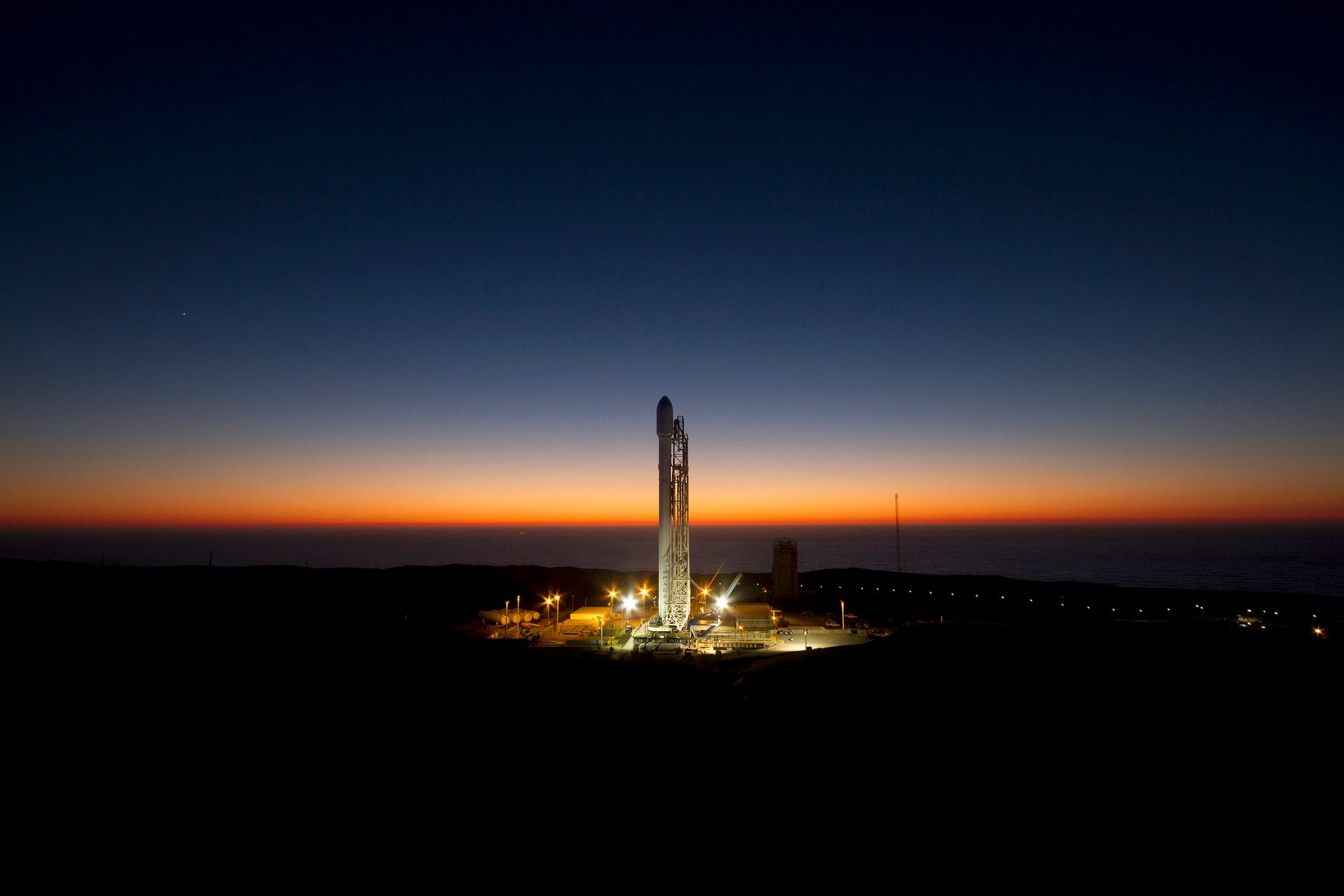
NASA picks Eric Schmidt's rocket company for a 2028 mission to Mars
NASA has picked Relativity Space — the rocket company former Google chief executive Eric Schmidt acquired in 2025 — to deliver its next low-cost Mars mission. The Verge says the $1.2bn contract targets a launch window in the summer of 2028.

Telegram ban in India sparks a rush to VPNs and rival messaging apps
India's ban on Telegram has driven tens of millions of users to VPNs and alternative messaging apps. TechCrunch reports the move has reignited a wider debate on content moderation and data compliance.

Every fusion startup that has raised over $100M: where private capital has taken nuclear fusion
TechCrunch lists the 14 nuclear fusion startups that have crossed the $100m fundraising mark. Total private capital in the sector now passes $9bn, with approaches ranging from magnetic confinement to inertial and hybrid designs.

Why is DuckDB so fast? Columnar storage, vectorised execution and a modern analytical engine design
The open-source analytical database DuckDB has become a standard component in data-science tool stacks over the past three years. A new technical post highlighted on Hacker News walks through the three core design choices behind the engine's speed — columnar storage, vectorised execution and zero-copy integration.
