Every fusion startup that has raised over $100M: where private capital has taken nuclear fusion

Nuclear fusion has been described as "30 years away" for more than half a century. In the past five years, however, the wave of private capital has begun to change that picture. TechCrunch's comprehensive list pulls together the 14 fusion startups that have crossed the $100m fundraising mark. Total private capital in the sector now sits around $9bn, against roughly $1bn five years ago.
At the top of the list is Commonwealth Fusion Systems (CFS), spun out of MIT in 2018, which has raised about $2bn. CFS's SPARC reactor uses high-temperature superconducting magnets to shrink tokamak size. Backers include Bill Gates's Breakthrough Energy Ventures, Google and Tiger Global.
Second is Helion Energy, with $1.4bn raised. Its approach differs from a conventional tokamak: a pulsed inertial-magnetic hybrid. The company has signed a 50 MW electricity deal with Microsoft, for 2028 — the first commercial sale of fusion energy on record. Chief executive David Kirtley says first production is targeted for 2028.
Third is TAE Technologies ($1.2bn). Its boron-proton fusion approach aims to minimise neutron production and reduce radioactive waste. Investors include Google, Vulcan and NEA.
On the laser-driven inertial confinement side, three notable players have emerged. Focused Energy has raised $800m, First Light Fusion $500m and Marvel Fusion $400m. All three drew private interest after NIF's historic "ignition" milestone in 2022. Focused Energy spun out of a Texas A&M University team based in Germany.
On the magnetic-confinement side, small-scale approaches such as Tokamak Energy ($600m, UK), General Fusion (Canada, $500m), Renaissance Fusion (France, $300m) and Marvel Fusion are competing. Tokamak Energy's spherical tokamak design claims more efficient plasma compression in a smaller footprint.
Proxima Fusion (Germany, $280m) stands out for its stellarator approach. Stellarators carry more complex magnetic geometry than tokamaks but can confine plasma continuously. Proxima spun out of the Max Planck Institute and builds on the technical record of the Wendelstein 7-X stellarator.
Among the more experimental designs, Avalanche Energy ($200m) is developing a small modular reactor concept; if its refrigerator-sized reactor target works, a distributed-generation model becomes possible. Xcimer Energy ($150m) is pursuing an excimer-laser-based design.
The last three names on the list — Type One Energy, Realta Fusion and Pacific Fusion — each sit at the $100m–$150m level and are at earlier stages. Type One Energy is another stellarator effort, Realta Fusion pursues mirror confinement, Pacific Fusion is on the inertial side.
The overall picture: 14 companies, $9bn, at least six distinct reactor architectures. Compared with five years ago, the sector has become significantly more diverse. TechCrunch's read is that which design produces net positive energy and reaches commercial scale is still open — but private capital's confidence suggests at least a handful of designs will reach pilot-reactor stage by the 2030s.
The critical question is not capital but physics: net positive energy (Q>1), long-term sustainable plasma, an economic tritium cycle, and a low-cost magnet/material supply chain. The US Department of Energy's 2025 roadmap update says a commercial fusion reactor before 2035 is unrealistic. If Helion's 2028 target succeeds, however, it will pull that timeline forward.
Read next

The discovery that changed how scientists think about memory: a look at the 2026 Kavli Prize work
This year's Kavli Prize in Neuroscience went to the work showing that brain cells tag past experiences with 'synaptic markers' that move them into long-term memory. The IBM Think summary asks what the finding could change in AI design.

Can some coral reefs survive global warming? Scientists are racing to find them
Coral reefs are among the ecosystems most rapidly damaged by global warming. Ars Technica reports on the scientists searching for heat-tolerant coral colonies that could act as 'seed reefs' in the warmer oceans of the future.
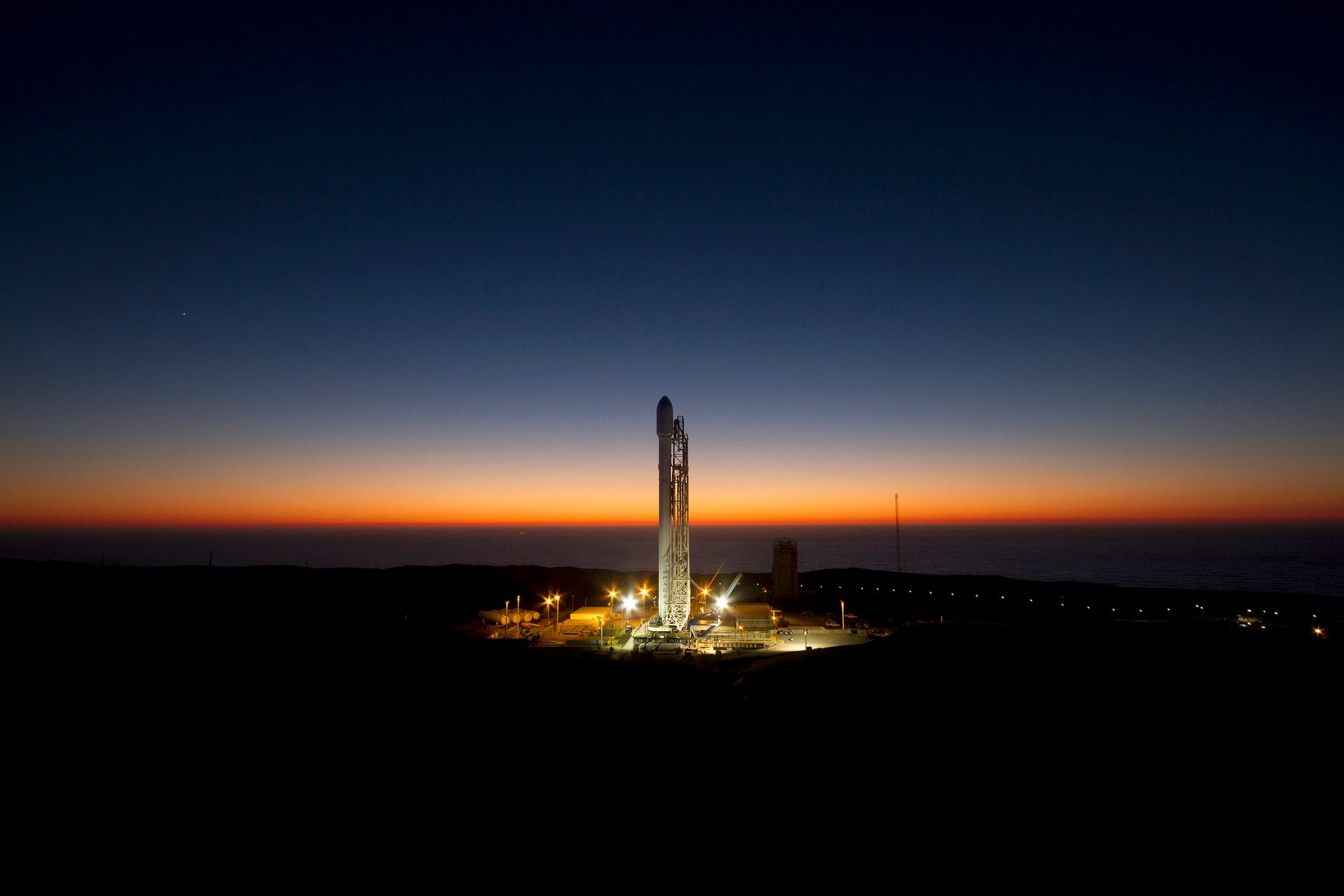
NASA picks Eric Schmidt's rocket company for a 2028 mission to Mars
NASA has picked Relativity Space — the rocket company former Google chief executive Eric Schmidt acquired in 2025 — to deliver its next low-cost Mars mission. The Verge says the $1.2bn contract targets a launch window in the summer of 2028.

Telegram ban in India sparks a rush to VPNs and rival messaging apps
India's ban on Telegram has driven tens of millions of users to VPNs and alternative messaging apps. TechCrunch reports the move has reignited a wider debate on content moderation and data compliance.

Why is DuckDB so fast? Columnar storage, vectorised execution and a modern analytical engine design
The open-source analytical database DuckDB has become a standard component in data-science tool stacks over the past three years. A new technical post highlighted on Hacker News walks through the three core design choices behind the engine's speed — columnar storage, vectorised execution and zero-copy integration.
