NASA picks Eric Schmidt's rocket company for a 2028 mission to Mars
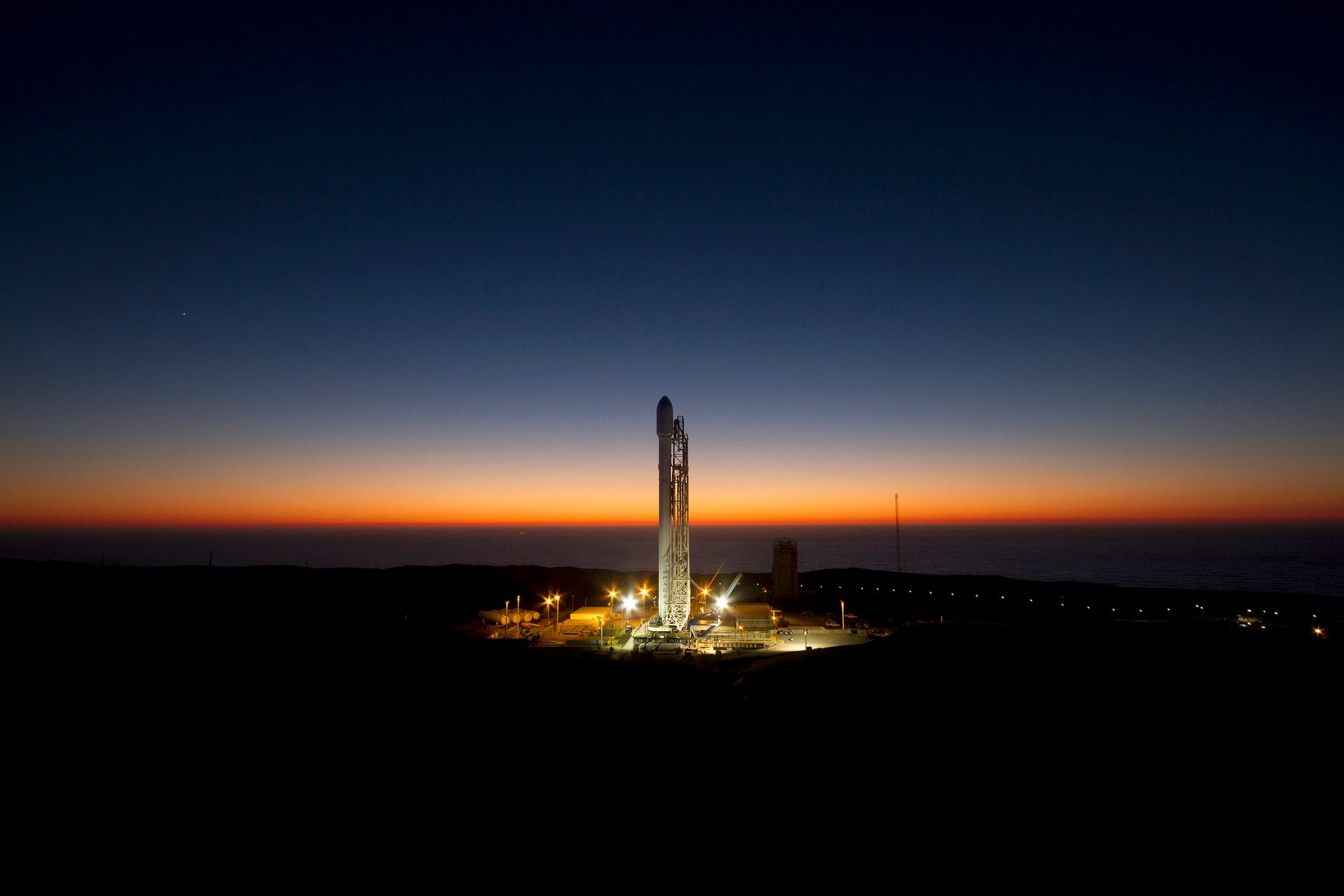
NASA has announced the prime contractor for its next low-cost Mars mission: Relativity Space. According to The Verge, the $1.2bn contract goes to the company former Google chief executive Eric Schmidt acquired in 2025. The launch window opens in the summer of 2028; the mission will deliver a small science payload to the Martian surface and station a relay satellite in orbit.
Schmidt bought Relativity Space in 2025 after the company had lost much of its early valuation. At the time it was struggling to keep its Terran 1 rocket afloat and its larger mid-class rocket programme, Terran R, was slipping. After Schmidt's funding and management overhaul, Terran R completed its first successful orbital test in early 2026.
The critical difference is manufacturing. Relativity Space prints about 85% of its launch vehicles using 3D printing — an industry first. The approach cuts production time to about a third of traditional rockets and reduces part count by a factor of ten. The company's Long Beach, California, plant is scaling capacity to produce six Terran R vehicles in 2027.
What will the Mars mission do? NASA's official manifest lists two main payloads: a small lander (200 kg, one-tenth the size of Curiosity) and a Mars relay orbiter. The lander will measure surface chemistry and moisture distribution. The relay will provide communications infrastructure for future Mars surface missions and serve as a backup as the ageing MAVEN and Mars Reconnaissance Orbiter approach end of life.
Why Relativity Space? NASA cites cost and production speed. Compared with previous Mars missions, this one comes in at roughly 60% less. Curiosity cost $2.5bn (in line with the broader programme cost), Perseverance $2.7bn. This mission delivers a small lander plus relay for $1.2bn.
There is risk. Relativity Space has no Mars heritage; its furthest payloads to date have been in lunar orbit. Mars approach and atmospheric entry require very different engineering. NASA, scarred by the Mars Climate Orbiter (1999, failed) and Mars Polar Lander (1999, failed), acknowledges Mars entry is still the "seven minutes of terror" most fraught phase.
Competition was real. SpaceX offered Starship-based payload delivery to Mars, but NASA cited Starship's "design maturity" as a reason not to choose it. Lockheed Martin proposed a conventional Atlas V-based solution; it was dropped on cost grounds. Blue Origin's New Glenn option was considered, but its Mars-injection capability is still unproven.
Schmidt's private-capital push into space points to a wider trend. Beyond Relativity Space, he has backed Stoke Space, Astroscale and Magdrive. The pattern marks a new wave of billionaire-led space investment, following Bezos, Musk and Branson into infrastructure rather than purely launch.
In his statement to The Verge, Schmidt described the Mars mission as "a starting point for humanity". But the commercial logic is equally clear: NASA contracts are the steady funding base for small space companies, and a successful Mars mission would also be a reference asset for satellite-servicing and lunar-infrastructure work.
The launch schedule pressure is Mars–Earth alignment. The optimum trajectory window arrives only every 26 months. Missing the summer 2028 window pushes the next opportunity into autumn 2030, which is why Relativity Space's production schedule must hold.
The Verge's broader read is that this mission embodies NASA's shift away from "reusable spacecraft + narrow scope" towards "fast, small, more frequent". If it succeeds, modest research missions to Mars on a two-yearly cadence could become a new normal within the decade.
Read next

The discovery that changed how scientists think about memory: a look at the 2026 Kavli Prize work
This year's Kavli Prize in Neuroscience went to the work showing that brain cells tag past experiences with 'synaptic markers' that move them into long-term memory. The IBM Think summary asks what the finding could change in AI design.

Can some coral reefs survive global warming? Scientists are racing to find them
Coral reefs are among the ecosystems most rapidly damaged by global warming. Ars Technica reports on the scientists searching for heat-tolerant coral colonies that could act as 'seed reefs' in the warmer oceans of the future.

Telegram ban in India sparks a rush to VPNs and rival messaging apps
India's ban on Telegram has driven tens of millions of users to VPNs and alternative messaging apps. TechCrunch reports the move has reignited a wider debate on content moderation and data compliance.

Every fusion startup that has raised over $100M: where private capital has taken nuclear fusion
TechCrunch lists the 14 nuclear fusion startups that have crossed the $100m fundraising mark. Total private capital in the sector now passes $9bn, with approaches ranging from magnetic confinement to inertial and hybrid designs.

Why is DuckDB so fast? Columnar storage, vectorised execution and a modern analytical engine design
The open-source analytical database DuckDB has become a standard component in data-science tool stacks over the past three years. A new technical post highlighted on Hacker News walks through the three core design choices behind the engine's speed — columnar storage, vectorised execution and zero-copy integration.
