Black Death in Switzerland: Why Young Laborers Suffered Most of All

A new wave of historical research into a seventeenth-century plague outbreak in Switzerland is challenging one of the oldest assumptions about the Black Death: that as a disease, it acted as a "great leveller," striking rich and poor alike without regard for social rank. Researchers who examined the outbreak's mortality patterns argue instead that one group bore a disproportionate share of the deaths — young, wage-earning laborers who could not afford to withdraw from work or travel.
The Black Death refers most narrowly to the initial pandemic that swept across Europe between 1347 and 1351, killing an estimated 30 to 50 percent of the continent's population. Caused by the bacterium Yersinia pestis and spread largely by fleas carried on rodents, it arrived along trade routes from Central Asia and moved rapidly through crowded medieval cities and countryside alike.
What is less widely known outside academic history is that the initial pandemic was only the first of many. Plague returned to Europe in recurring waves for roughly the next four centuries, flaring up regionally rather than continent-wide, with Switzerland recording serious outbreaks well into the 1600s before the disease gradually receded from Western Europe by the early eighteenth century. Other well-known seventeenth-century outbreaks, such as the Great Plague of London in 1665, belong to this same recurring pattern rather than standing as isolated events, underscoring how persistent the disease remained across the region long after the fourteenth-century pandemic had passed.
The "great leveller" description has circulated for centuries in part because plague, unlike many other pre-modern hazards, did not require close contact with an infected person to spread — fleas and the rodents that carried them moved through households of every social class. Some early modern commentators explicitly framed mass death as a demonstration that disease made no distinction between the wealthy and the poor.
Historians studying mortality more closely have increasingly complicated that picture. By cross-referencing parish burial registers with tax and property records from the affected Swiss communities, researchers were able to reconstruct not just how many people died during the seventeenth-century outbreak but who they were — their approximate age, marital status, and economic position.
According to that research, the group that died in the highest proportions was young, largely unmarried male laborers, people who worked for wages rather than living off inherited land or a household's own stores. The same records suggested that women and older, more established heads of household were comparatively better represented among survivors, though the researchers caution that surviving documentation is patchier for some social groups than others. Historians involved in the work argue that this pattern points to economic exposure as much as biological chance.
The reasoning follows from how plague spread. Wealthier households, with land, savings, or stored food, had the option to isolate at a rural property, close off contact with outsiders, or simply stop working for a period without facing destitution. Laborers dependent on daily or seasonal wages generally did not have that option; continuing to work in markets, workshops, and shared lodgings kept them in closer and more frequent contact with the routes along which infected fleas and rodents traveled.
This is not the first regional study to find that plague mortality varied by economic status rather than striking uniformly. Historians examining outbreaks in various European cities have previously noted that crowded, poorer urban districts often recorded higher death tolls than wealthier ones, although the degree of variation, and the reasons behind it, differed from place to place and remains an active subject of research.
What the Swiss case adds, researchers say, is a clearer picture of one specific vulnerable group — mobile, young wage laborers — rather than "the poor" treated as a single undifferentiated category. That distinction matters to historians because it suggests occupational mobility and the need to keep earning, rather than poverty alone, shaped who was exposed to infection.
The findings feed into a broader reassessment among historians of how social and economic structure shaped survival during pre-modern epidemics generally. Rather than discarding the idea that plague was indiscriminate at the level of the pathogen itself, this body of research argues that the disease's toll on any given community was still substantially filtered through existing inequality — a pattern later demographers have traced in outbreaks well beyond the medieval and early modern periods.
Read next

Why Did Medieval Women Choose to Be Walled In Alive in Spain?
In Astorga, Spain, a tiny stone cell wedged between two churches once housed medieval women who chose permanent enclosure as an extreme act of devotion. Historians call the practice anchoritism, documented across medieval Europe from the eleventh century onward. The cell survives as one of the few physically intact examples of a custom otherwise known mainly from written vows and church records.

Marilyn Monroe's Death: What Really Happened on August 5, 1962
Marilyn Monroe, one of Hollywood's most famous actresses, was found dead at her Los Angeles home on August 5, 1962, at age 36. The Los Angeles County coroner's office ruled the death a probable suicide from acute barbiturate poisoning. Decades of unproven conspiracy theories have never altered the official record.
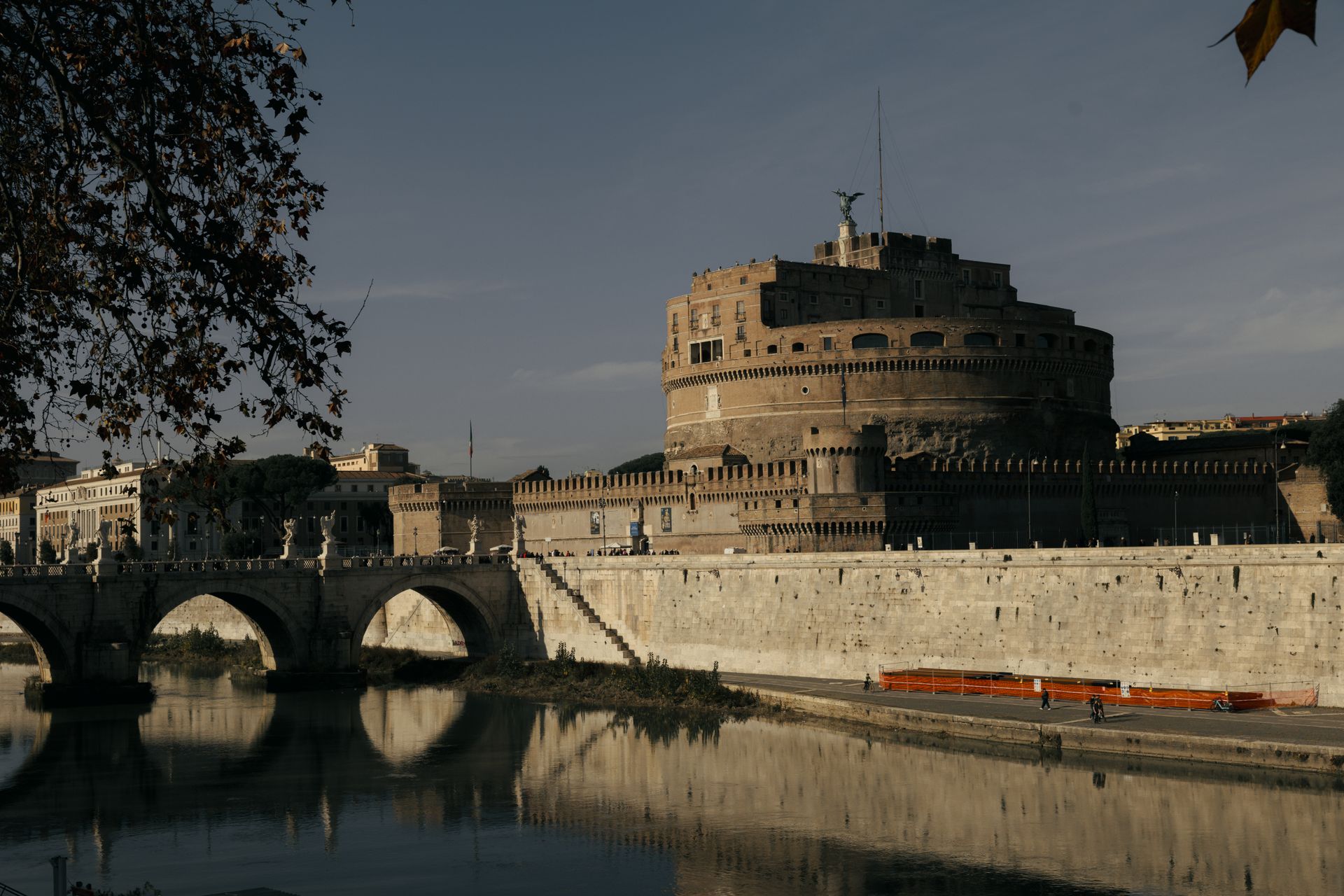
Renaissance Italy's firearm revolution: how gunpowder rewrote the rules of war
In the late 15th and 16th centuries, the fractured city-states of Italy became an unlikely laboratory for gunpowder warfare, testing early firearms and cannon that could breach walls built to withstand centuries of siege. The innovations that followed reshaped fortification design, military theory and the economics of war across Europe.

On this day: Anne Frank and seven others are arrested in Amsterdam's Secret Annex
On 4 August 1944, German security police raided a hidden annex above an Amsterdam canal-house warehouse, arresting Anne Frank, her family and four others after more than two years in hiding. Her diary, recovered afterward, became one of the world's most widely read accounts of the Holocaust.

How Did the Search for Alien Life Become a Serious Scientific Field?
The scientific study of whether life exists beyond Earth, once dismissed as speculation, took shape as a formal research field called exobiology around 1960, driven by Cold War-era space exploration and advances in origin-of-life chemistry. The field later broadened into today's astrobiology, incorporating discoveries of extremophiles and exoplanets.